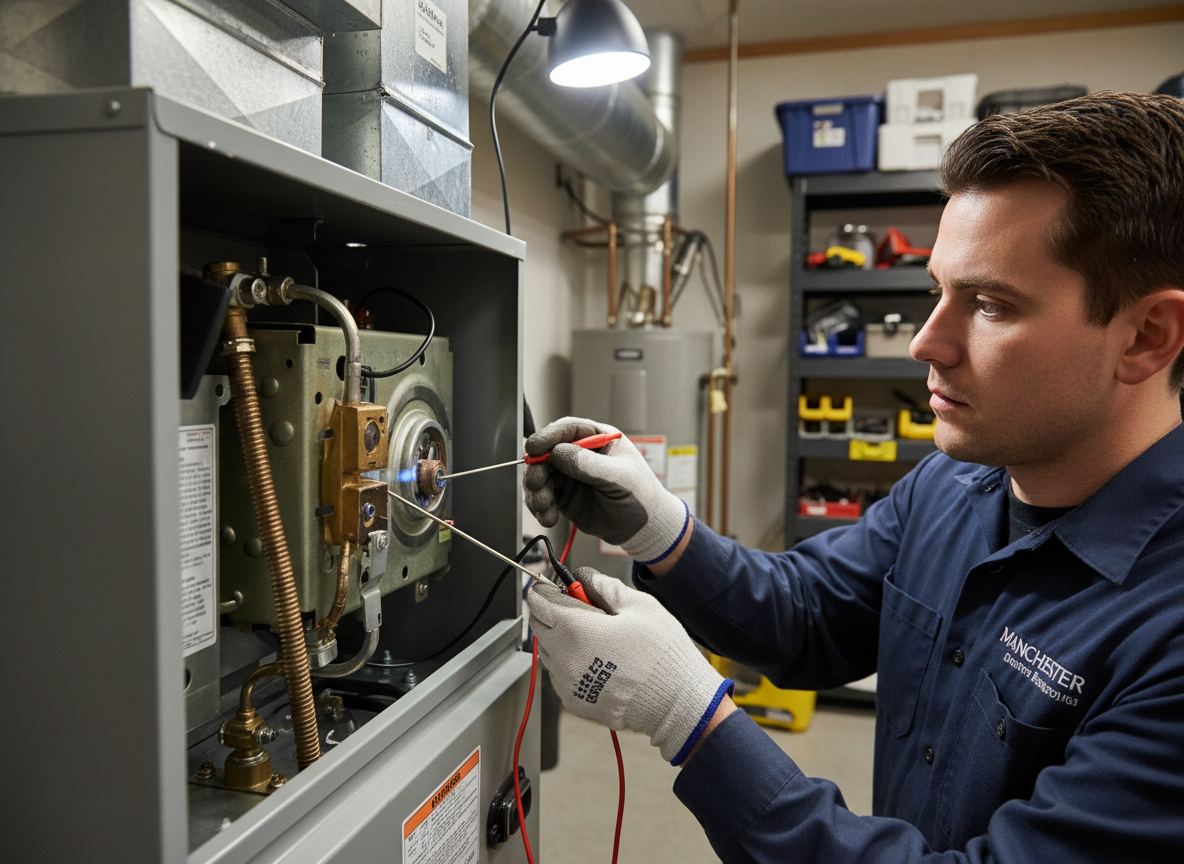
Manchester homes in neighborhoods like the East Side and Buckland often feature older heating systems that struggle during the shift to humid continental winters. Pilot lights can fail to stay lit when wind-driven drafts enter through aging chimneys or when flame sensors accumulate residue from seasonal temperature swings between cold nights and warmer days. Technicians check thermocouple connections and sensor alignment because even minor misalignment in these homes leads to repeated shutdowns once temperatures drop below freezing.
Flame sensors in East Hartford-adjacent properties require careful cleaning rather than immediate replacement because soot from oil or gas combustion builds faster in humid summers. The process involves removing the sensor, using emery cloth on the metal rod, and verifying the control board signal without altering factory settings. In Downtown Manchester row houses, tight mechanical rooms limit access, so repairs often involve partial disassembly of surrounding ductwork to reach the assembly safely.
Common Causes in Local Housing Stock
Older furnaces common around Wickham Park and Cheney Homestead areas develop pilot issues from corroded orifices and weakened flame sensors after years of cycling through harsh winters. Homeowners sometimes mistake a weak pilot for a full system failure when the real problem is a dirty sensor that no longer detects the flame properly.
Seasonal Considerations
Cold snaps increase call volume because overnight lows force furnaces to run longer cycles, exposing any marginal pilot or sensor problems. Addressing these before the first hard freeze prevents mid-winter breakdowns when parts availability tightens across Hartford County.
Technician insight
In Manchester, the thing that catches most people out with Furnace Pilot Light and Flame Sensor Repair is how quickly residue builds on sensors during humid summers then causes failures the first time the furnace cycles hard in a cold snap. Older East Side homes with original equipment often need the sensor rod polished rather than swapped, yet homeowners keep resetting the board instead of addressing the root cause.
Pilot Failure in Buckland Home
A Buckland furnace would not stay lit after the first cold front moved through. Inspection showed heavy oxidation on the flame sensor and a partially blocked pilot orifice from years of seasonal cycling. Cleaning the sensor and orifice restored steady flame detection. The system ran without lockouts through the rest of the winter.
Furnace Pilot Light and Flame Sensor Repair Services We Offer
✓Pilot Light Ignition Repair
Restores reliable pilot flame in Manchester furnaces by cleaning orifices and adjusting gas pressure to prevent outages during winter cold snaps.
✓Flame Sensor Cleaning
Removes oxidation and carbon buildup from sensors so the furnace recognizes the pilot flame without unnecessary lockouts in Buckland homes.
✓Flame Sensor Replacement
Installs new sensors matched to your furnace model when cleaning no longer restores proper signal strength in East Side properties.
✓Thermocouple Replacement
Replaces worn thermocouples that fail to hold the pilot open, a frequent issue in older Hartford County heating systems exposed to temperature swings.
✓Pilot Assembly Inspection
Checks the full pilot assembly for leaks, cracks, and alignment problems common after decades of service in Downtown Manchester housing.
How it works
- 1
Safety Shutoff and Visual Check
Turn off gas and power, then inspect the pilot assembly for obvious damage or debris before any work begins.
- 2
Sensor and Orifice Cleaning
Remove and clean the flame sensor rod and pilot orifice to restore proper flame contact and signal.
- 3
Reassembly and Testing
Reinstall components, relight the pilot, and run the furnace through multiple cycles to confirm stable operation.
- 4
Final System Verification
Confirm no gas leaks exist and that the control board registers the flame correctly under load.
Quotes
Clear quotes provided after inspection; costs depend on whether cleaning suffices or replacement parts are required for the specific furnace.